


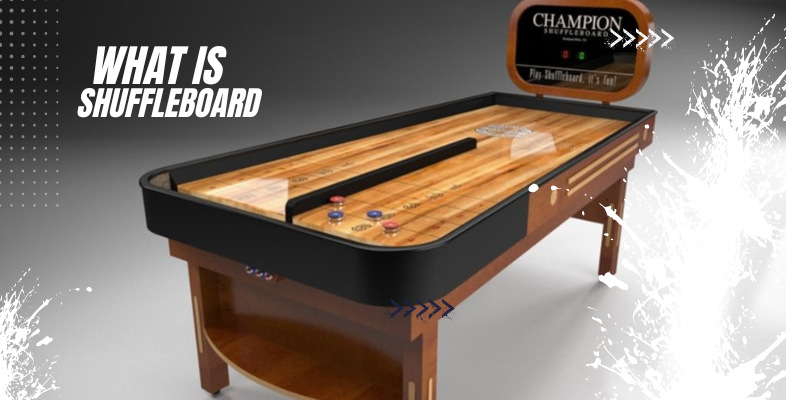
What is Shuffleboard
Shuffleboard is a classic game that combines precision, strategy, and smooth gameplay. Whether played on a polished wooden table or on ice, shuffleboard has entertained players for decades in homes, bars, clubs, and professional tournaments.
In this complete guide, we’ll cover everything you need to know about shuffleboard, ice shuffleboard, costs, building options, and even ice rink technology.
What Is Shuffleboard?
Shuffleboard is a game where players slide weighted discs (called pucks or weights) across a smooth surface to score points. The goal is simple: land your puck in a scoring zone while knocking your opponent’s puck away.
There are two main types:
-
Table Shuffleboard – Played indoors on long wooden tables.
-
Court Shuffleboard – Played outdoors on concrete courts.
The game is popular worldwide because it is easy to learn but requires skill to master.
What Is the Shuffleboard Game?
The shuffleboard game is played in rounds. Players take turns sliding pucks toward the opposite end of the table or court. After all pucks are played, points are calculated.
Common winning scores:
-
15 points
-
21 points
Strategy is important. You can:
-
Protect your scoring puck
-
Knock opponents’ pucks away
-
Block scoring areas
Can You Bust in Shuffleboard?
Yes. A bust happens when a player exceeds the maximum winning score.
For example:
-
If the winning score is 21 and a player scores 23, the score may reset to a lower number (depending on house rules).
Always confirm rules before playing.
How to Make a Shuffleboard Table (DIY Guide)
Building your own shuffleboard table can be a rewarding project.
Basic Steps:
-
Choose hardwood (maple is preferred).
-
Build a flat surface (9–22 feet long).
-
Add side rails to prevent pucks from falling.
-
Sand and apply a smooth polyurethane finish.
-
Apply shuffleboard wax for smooth sliding.
-
Mark scoring lines.
Proper leveling is very important for accurate gameplay.
How to Build a Shuffleboard Court
Outdoor shuffleboard courts are typically:
-
52 feet long
-
6 feet wide
Construction Steps:
-
Prepare a flat concrete base.
-
Paint scoring triangles.
-
Add boundary lines.
-
Install lighting if needed.
-
Use official discs and cues.
Courts are popular in parks, clubs, and residential communities.
Shuffleboard is simple to learn but requires skill and strategy to win. Below are the basic rules for both table and court shuffleboard.
Objective of the Game
The goal is to slide your puck (weight/disc) into the highest scoring area without falling off the edge and while preventing your opponent from scoring.
Number of Players
-
2 players (1 vs 1)
-
4 players (2 vs 2 teams)
Players take turns sliding their pucks.
Equipment
-
Shuffleboard table or court
-
8 pucks (4 per player/team)
-
Shuffleboard cue (for court version)
Each player usually has a different color puck.
How to Play
-
Players decide who goes first.
-
Each player slides one puck at a time.
-
Players alternate turns until all 8 pucks are played.
-
After the round, points are counted.
Scoring Rules (Table Shuffleboard)
-
Only pucks that fully pass the foul line count.
-
Pucks hanging slightly over the edge (called “hanger”) may score maximum points.
-
Only one player scores per round — the player with the puck closest to the end.
Typical scoring zones:
-
1 point
-
2 points
-
3 points
Scoring Rules (Court Shuffleboard)
-
The scoring area is a triangle divided into sections (10, 8, 7 points).
-
Pucks must be fully inside a scoring section to count.
-
Pucks touching lines may not count (depending on rules).
What Is a “Bust”?
If playing to 21 points:
-
If a player scores over 21, their score may reset (house rule).
-
Some rules require exact 21 to win.
Always confirm the scoring format before starting.
Winning the Game
The first player or team to reach:
-
15 points (casual play)
-
21 points (standard play)
wins the game.
Basic Strategy Tips
-
Knock opponent pucks off the board.
-
Protect your highest scoring puck.
-
Use soft shots for control.
-
Aim for edge “hangers” for maximum points.
Final Note
Shuffleboard is easy to start and fun for all ages. Once you understand these basic rules, you’re ready to play confidently and improve your strategy.